Written by: Bill Carton
Edited by: Caroline Babisz, Natasha Barrow and Lucy Ahern
Company: Neobe Therapeutics
Location: Stevenage Biosciences Catalyst
Founded: 2021
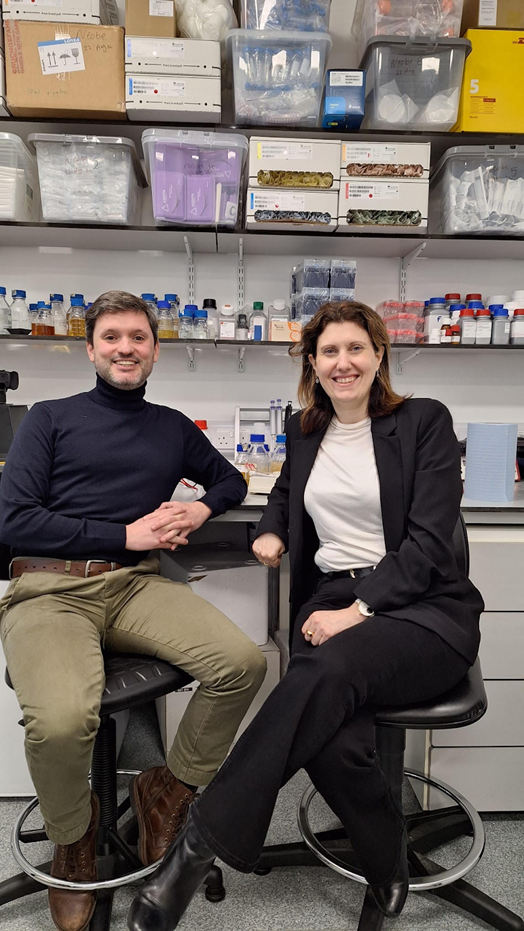
Founders: Pedro Correa de Sampaio, Annelise Soulier
The advent of immunotherapies has changed the landscape of anticancer treatment by enabling the patient’s own immune system to recognise and destroy cancer cells. Some immunotherapies, such as chimeric antigen receptor (CAR) T-cell therapy, have provided revolutionary new ways to treat previously untreatable cancers, specifically haematological malignancies [1]. In these cases, some patients have shown fantastic response rates to these revolutionary treatments. However, the success of these treatments in solid tumours has been far more limited and in some hard-to-treat cancers, such as pancreatic cancer, response rates remain disappointingly low [2].
A major barrier to the effectiveness of these treatments in solid tumours is the dense tumour microenvironment (TME). The TME consists of all the non-cancer cells, blood vessels, and an extracellular matrix surrounding the cancer cells. The latter — an acellular mesh of collagens and proteoglycans — remains a particularly unaddressed constraint to therapeutic efficacy, creating a dense fibrotic network which acts like a fortress, impeding both immune cells and therapeutic agents from reaching their target [3]. Whilst the cancer cells themselves might be susceptible to treatment, this protective barrier often renders such treatments ineffective as they are unable to penetrate this barrier and physically reach their targets. This often leads to “immune exclusion”, where immune cells primed to eliminate cancer cells are also unable to penetrate the tumour and reach them. It is estimated that about 80% of these patients do not respond to immunotherapies [4, 5, 6]. However, if the TME was to be restructured or reduced to make the cancer cells more accessible to these treatments, then the response rates to these drugs would increase.
This is where Neobe Therapeutics comes in. Neobe is developing an innovative solution to this challenge by using programmable bacteria, aptly referred to as microbial trojan horses, to penetrate these solid tumours and disrupt the TME from within. These engineered microbes are designed to secrete factors that remodel the tumour’s physical environment, increasing the accessibility of immune cells and therapeutics to the cancer. By breaking down these biological barriers, Neobe’s approach has the potential to significantly enhance the efficacy of existing immunotherapies, offering new hope for patients with treatment-resistant solid tumours whilst sparing healthy tissue.
Neobe Therapeutics was born from a combination of scientific curiosity, networking and a stroke of serendipity. It was through a chance encounter at a conference in Miami that founder Pedro Correa de Sampaio first connected with Deep Science Ventures, a venture builder which helped found Neobe. At the time, Pedro was working as a postdoctoral researcher in the US studying the TME. Deep Science Ventures were interested in developing new solutions to target the TME and increasing the response rates of current anti-cancer therapies. When the COVID-19 pandemic hit, Pedro took an entrepreneurial leap and founded Neobe Therapeutics.
When Pedro began exploring strategies to overcome the protective barrier of the TME in solid tumours, he was struck by an unconventional idea: using bacteria to remodel it. It was during this time when he met his co-founder Annelise Soulier. Annelise was working as a scientist at another biotech company, Prokarium, and had helped to develop one of their bacterial vaccine candidates which was heading towards clinical trials at the time. The synergy between Pedro’s knowledge of the TME and Annelise’s expertise in the genetic engineering of bacteria led to the perfect foundations for Neobe.
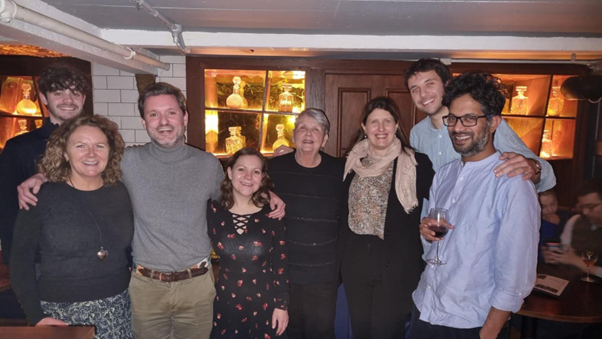
Neobe closed a successful fundraising campaign in December 2023, raising over $2.34 million to continue their work. This financial milestone was achieved with new investors Pioneer Group and 2048 Ventures alongside pre-existing backers: Deep Science Ventures, Cancer Research Horizons and Discovery Park Ventures. Having demonstrated preclinical efficacy for their two lead products, targeting breast and pancreatic cancers, they now aim to carry out their first-in-human trials in 2027. Neobe also aspire to partner with more companies to help get their drugs successfully into the clinic and to a lot more cancer patients.
When asked what the future looks like for Neobe, Pedro said “To me, success is making a difference for cancer patients, it’s why I got into the business in the first place”. It’s clear that Neobe Therapeutics are passionate about improving the lives of cancer patients. To stay up to date with Neobe’s progress you can check out their website here and their LinkedIn here.
[1] X. Zhang, L. Zhu, H. Zhang, S. Chen and Y. Xiao, “CAR-T Cell Therapy in Hematological Malignancies: Current Opportunities and Challenges,” Frontiers in Immunology, vol. 12, 2022.
[2] U. Uslu, S. Castelli and C. H. June, “CAR T cell combination therapies to treat cancer,” Cancer Cell, pp. 1319-1325, 2024.
[3] J. Zhang, Z. Shi, X. Xu, Z. Yu and J. Mi, “The influence of microenvironment on tumor immunotherapy,” Febs journal, vol. 286, no. 21, pp. 4160-4175, 2019.
[4] E. Appleton, J. Hassan, C. Chan Wah Hak, N. Sivamanoharan, A. Wilkins, A. Samson, M. Ono, K. J. Harrington, A. Melcher and E. Wennerberg, “Kickstarting Immunity in Cold Tumours: Localised Tumour Therapy Combinations With Immune Checkpoint Blockade,” Frontiers in Immunology, 2021.
[5] P. Bonaventura, T. Shekarian, V. Alcazer, J. Valladeau-Guilemond, S. Valsesia-Wittmann, S. Amigorena, C. Caux and S. Depil, “Cold Tumors: A Therapeutic Challenge for Immunotherapy,” Frontiers in Immunology, 2019.
[6] P. Sharma, S. Hu-Lieskovan, J. A. Wargo and A. Ribas, “Primary, Adaptive, and Acquired Resistance to Cancer Immunotherapy,” Cell, vol. 168, no. 4, pp. 707-723, 2017.

Sign up for our monthly newsletter of upcoming events, recently published insights, member news and SEC updates.
.jpg)
