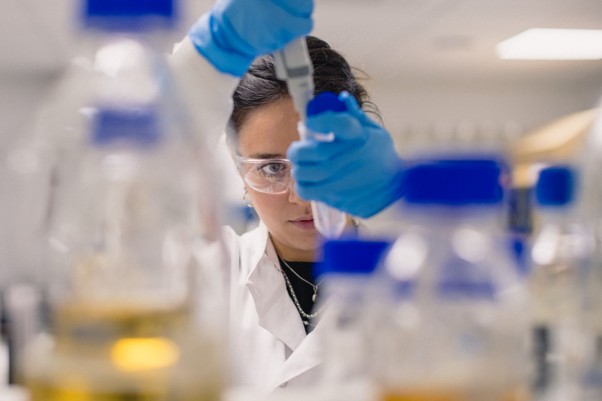
Written by: Ariyana Rayatt
Edited by: Lucy Ahern and Natasha Barrow
Company: Solena Materials
Location: London
Founded: 2022
Founders: Dr. James MacDonald, Professor Paul Freemont, and Professor Milo Shaffer
Traditionally, the production of textile materials was interwoven with farming, experimenting with the best crops for durable fibres. Material development then moved to the lab, where petroleum offered the promise of high-performance materials at a fraction of the cost. Increasingly, the environmental impact of these petroleum-based materials has prompted brands to find another path forward. However, replacing materials like polyester and nylon is a tall order, with consumers being accustomed to fabrics with high tensile strength and durability as well as the desirable tactile quality often associated with natural fibres.
Solena Materials is a company developing fibres from novel proteins that exhibit the best properties of synthetic and natural fibres.
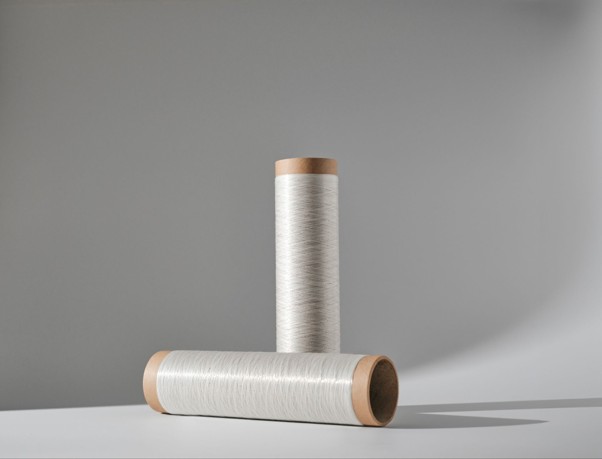
These novel proteins are computationally designed using Solena's in-house developed deep neural networks, together with a high throughput screening method to train those models to develop new types of materials that possess entirely new properties not currently present in existing textiles. This ability to precisely control the amino acid sequence allows for the creation of proteins with tailored functionalities.
Solena Materials is introducing a new category of 'performance naturals' – which combine the high-performance characteristics demanded by sportswear and technical apparel without the environmental downsides. By leveraging machine learning and automation, Solena Materials can create a highly efficient cycling model that generates optimised proteins for bespoke materials and precisely controls fibre properties at the molecular level. The designed proteins are tested with a high-throughput model to assess material properties. This data is used in a feedback loop to train the AI models for optimised protein design. With this model, Solena has yielded hundreds of potential proteins for use in high-performance materials.
In the future, Solena aims to bring a scalable, high-performing textile fibre to market that can be seamlessly adopted across the sportswear and apparel industries – with fibre properties that enable brands to reduce their reliance on synthetic fibres.
The founding team of Solena Materials met at Imperial College London, each with expertise in complementary fields. Dr. James MacDonald was a research fellow specialising in computational protein design, Professor Paul Freemont is a professor in synthetic biology, and Professor Milo Shaffer, a professor in material chemistry.
This combination of expertise came together following a question James had: Can synthetic proteins be used in modern materials? Collectively, the founders secured proof-of-concept funding to explore this question. With external interest in the work, Solena Materials spun out of Imperial College in 2022 when it became clear that the answer to James’s question was yes.
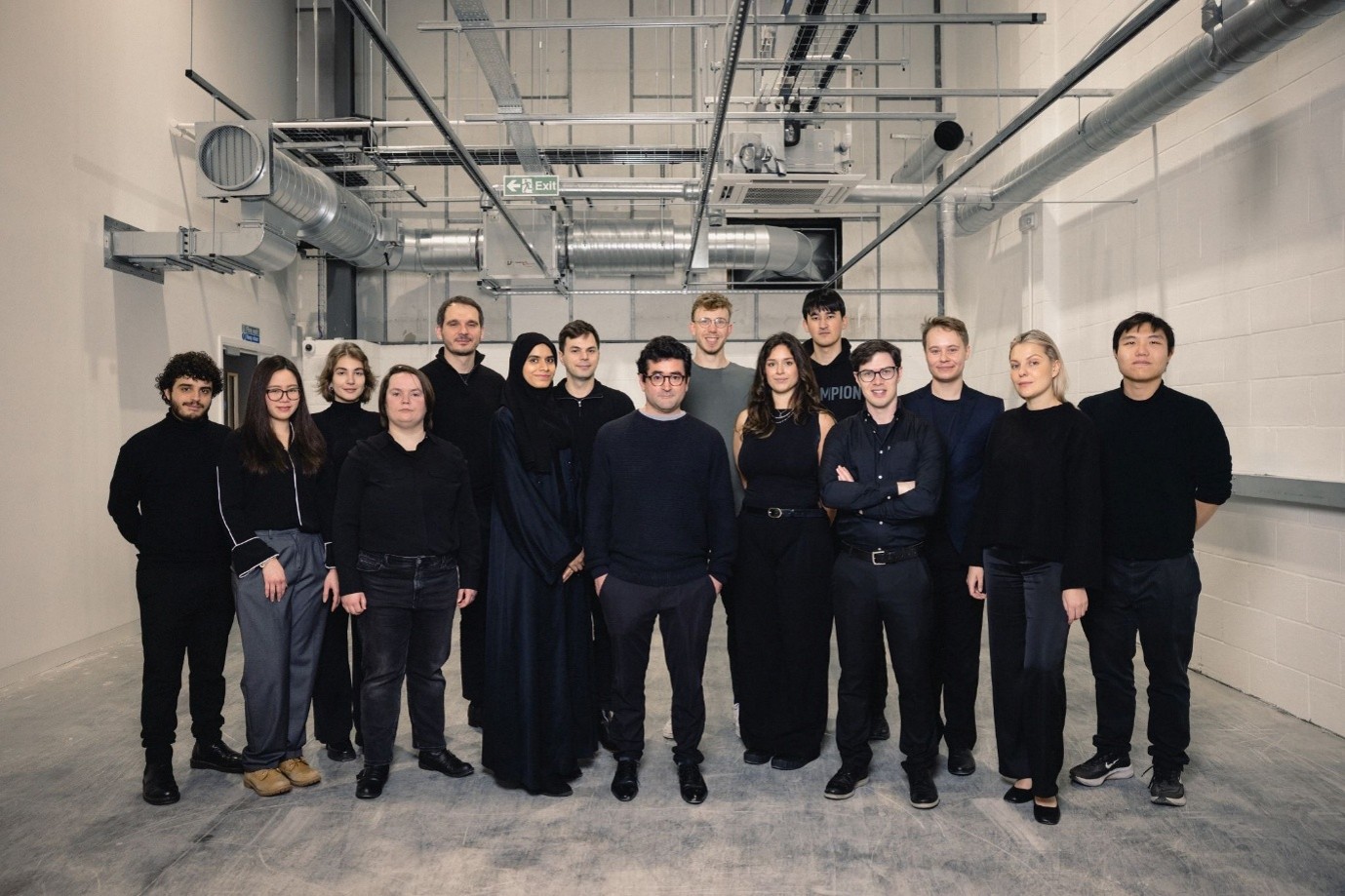
Solena recently announced €1.5M in EUREKA Eurostars grant funding for a project – following the company’s €6.7M seed funding round they closed in early 2025. The investors backing this round included Sir David Harding, SynBioVen and Insempra. This investment will propel Solena’s goal of reaching a tonne scale. To achieve this, they have expanded to a pilot facility in North Acton, enabling them to start commercially supporting their customers.

Sign up for our monthly newsletter of upcoming events, recently published insights, member news and SEC updates.
.jpg)
